Thank Freud I Can Over Analyze Myself
In the annals of keeping it real during a bougie war experience, one thing I didn’t expect was teaching Unit 4: Social Psychology and Personality to seniors about to graduate. This unit is typically what people envision when I say I teach AP Psychology–you know Zimbardo’s Stanford Prison Experiment, the Asch Conformity Experiment, and all the terms like groupthink, the bystander effect, and so on.
In the big scheme of the College Board pacing guide, this is a small unit, but it elicits the most engagement from students. Additionally, we discuss personality development and by extension the ways we handle stress or develop coping skills. Another core component of our work is defense mechanisms.
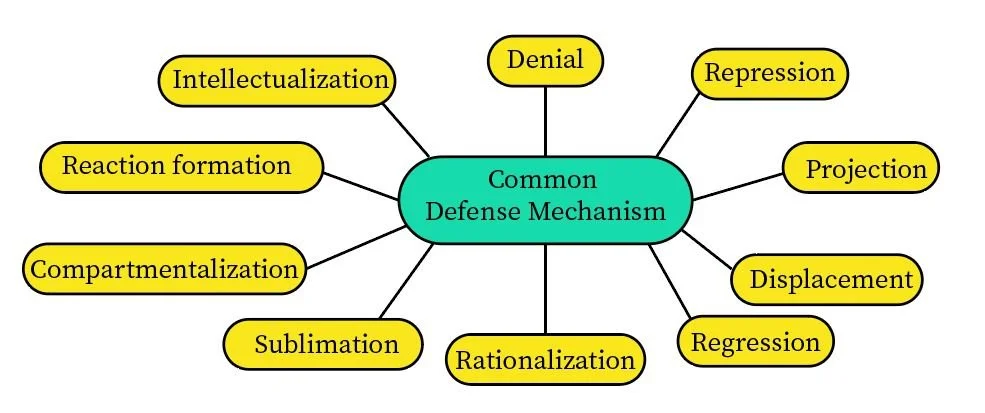
And let me tell you, from the mouth of babes…or in this case, 18 year-olds. The conversation that continues to linger with me is our discussion of the Freudian Psychodynamic Defense Mechanisms. In the hours, days, and now weeks after Gulf War III started, adults and young people alike here experienced 90% of these stages. I walked away from that lesson realizing that my students were A) far more self-aware than some of the adults in their lives and B) handling this conflict with more grace, maturity, and hope than most of the adults I was surrounded by.
Sidebar: I am not a psychologist and you probably will find something you don’t like in the definitions or places you disagree with me in the examples below. By no means is this extensive and I firmly believe everyone is doing the best they can. I do not however, believe that the US President nor Congress is doing the best they can. They are bums and literally destroying the world for their own personal gain.
Regression: Reverting to behaviors from early stages of development (aka childhood)
Ordering a favorite combo at McDonald’s (my students and I both did this last week!)
Rewatching a beloved Netflix series
Throwing a fit when your gym has closed for a few days due to drone interceptor debris
Digging up and wearing that old t-shirt you haven’t worn in a while but always loved
Intellectualization: Using complex logic to explain something
Reviewing the data on how many drones and/or missiles were shot at us and how many were intercepted
Asking ChatGPT to estimate the likelihood of danger in the UAE compared to danger in the US from violent crime
Writing a blog post 51 Ways to Fight, Flight, or Freeze My Way Through Gulf War III
Denial: Ignoring or refusing to acknowledge the facts
I can’t believe MESAC (our regional interscholastic competition) got cancelled
Why are they cancelling prom when it’s still weeks away?
The US President wouldn’t actually bomb Iran, something else must be happening
Rationalization: Approaching something logically but inaccurately to de-escalate the threat
This will be over quickly and we’ll go back to in-person school next week
Since the IB cancelled exams for Covid, they will probably cancel exams this year
The news is inflammatory, that’s not really what’s happening
Sharing questionably sourced or misinformation and adding “just wanted to share”
Hello, every elected official sitting on their butt instead of doing something about this war
Displacement: Redirecting feelings (usually negative ones) to something safer
Picking a fight with a sibling because I can’t do anything about being stuck in remote learning
Yelling at the principal in a meeting because they don’t have any answers about when we’re going back to school
Texting outrage in the group chat
Going to kickboxing and punching the mess out of the boxing bag
Projection: Often confused with displacements, but more of a transfer of one’s feelings to another person
I don’t know how to handle the alerts on my phone, so my partner must not either
So and so must be feeling anxious about this test because they didn’t study much (narrator: the person saying this is in fact the person who didn’t study)
Feeling guilty about wanting to leave a relatively safe country, so accusing someone else of making me feel guilty
Sublimation: Channeling socially unacceptable emotions or thoughts into something more acceptable
Focusing on homework and studying for the AP exam instead of worrying about the war
Planning summer travel
Cooking, sewing, baking, cleaning, writing, working out or anything else that seems “productive”
The notion of productivity itself!
Repression (or as Anna Freud called it “motivated forgetting”): Unconscious suppression
We didn’t discuss this one as related to current events and I’d venture to guess that we’ll see more of this as things continue or as we get some distance from the details (like folks did with the pandemic)
The unconscious and transient nature of these stages is also something important my students noticed. Typically, we can’t control when we’re responding with a particular defense mechanism (although I suppose even writing this is my own way of intellectualizing this whole experience). That said, as we learn to cope with the chaos around us, we might approach our stress with a little more calm, or maybe talk to a friend, or therapist about the roller coaster we are on.
Hopefully, being a little more aware of our own feelings and subsequent responses, having a hot shower, making space for a good cry, or even wolfing down a comfort meal will put us in a different head space to face the unknown ahead.