
A Special Thank You to our Listeners
We wanted to thank each of our listeners for giving our podcast a chance. We appreciate the comments, feedback, and push back. Most of all, we love the ongoing conversations happening in cars, bars and living rooms about how we can all be less basic.
Here are our top 3 most downloaded shows:
#3 “Shame Bell Your Gender Norms & Pumpkin Spice Yogurt”
From serious to sarcastic, in this episode we go ham with our shame bell. Shame, Shame, Shame, Shame, Shame. We've also never had more fun taste-testing artificially flavored pumpkin spiced foods and smacking our lips into a microphone.
#2 “Don't Send a Letter, Have a Conversation”
Sheree Cooks and Megan Clark bring the real talk as parents, community members, and community organizers. They challenge us to understand what it means to truly engaged with our families and communities--and they call on all of us to get more involved in our neighborhoods.
The most listened to episode yet....
A special thanks to Soneya Lund and Bernadette Ray for being our first guests on the show! Their honesty and candid commentary on what it means to be a woman of color set the tone for future episodes.
Here's to a better 2018! HAPPY NEW YEAR!!!
Thank you for listening to the show and please share it with your friends and family!

2017 EOY Review: Bright Embers of Hope in a White-Hot Dump Fire
Our EQ: What the hell happened this year and how do we make sense of it?
From hijab wearing Barbies and the election of the first openly transgender legislator (Danica Roem) to Australia legalizing gay marriage via national referendum and Bey slayin in her maternity pictures, 2017 had many hopeful moments. We recall some of our pop culture highlights of the year. In another segment called “Where Are They Now?” we catch up on the latest from women of the Alt Right and Roy Moore, the creep who won’t go away.
Mentioned in the episode:
- At a moment when white supremacy is echoed in the “America first” slogan of President Trump, Beyoncé dislodges “white” from its central place in religious symbolism with her maternity pics.
The White mediocrity of Taylor Swift continues to be as inspiring as Miracle Whip on Wonderbread AND she used her (very powerful) platform to take her sexual abuser to court and promote #MeToo
Time Person of the Year: Silence Breakers
Notable Movies: Moonlight Wins Best Picture, Kumail Nanjiani’s The Big Sick, Jordan Peele’s Get Out
Notable Music: Kendrick Lamar’s “Damn: Collectors Edition”, Drake’s Passionfruit has special significance, DJ Khaled/Bieber/Migos/Chance/Lil Wayne “I’m the One”, Luis Fonsi/Daddy Yankee “Despacito” and the Biology Parody, Macklemore had a new album with good “flow” (as the kids say), even if some of the lyrics are extreme slant rhymes or make literally no sense (he’s since sold out two shows at Key Arena)
Women of the Alt Right
Ladies Night: Meet the Women of the Alt Right
Umm….Mary Elizabeth Tyler is highly problematic
Alt Right Women Asked to Choose Submission To Grow Political Movement
“Alt Right Women Are Upset that Alt Right Men are treating them terribly”
Alt Right Women Discover Bitter Racists are Also Sexist Jerks
Women of the Alt Right Are Shocked and Hurt that Men in the Movement are Sexist
Roy Moore & Rebecca Corry
Louis CK has been SCRUBBED from Disney’s reruns of Gravity Falls. Like they voiced over his voice overs.
Since our episode the list of accused sexual abusers got longer: 25 new ones! Garrison Keillor, Tavis Smiley, and Morgan Spurlock (who outed himself!)
Timeless or Terrible:
Danskos
Dressing up your pet

Do Your Fudging Homework:
- Annie: in 2018, if you do nothing else, protect democracy. https://www.benjerry.com/whats-new/2016/advocates-for-democracy
- Hope: Go Read On Tyranny by Timothy Snyder

Ep. 9: Filet Mignon and A Bottle of Dom

Our EQ is: What role do race and class play in the food industry?
We’re joined by Corey Evans, culinary arts teacher at Lincoln High School and LHS alum. He tells us about his adventures and misadventures in the food industry, especially high-end dining, from the eastside of Tacoma to the eastern seaboard. He helps us dig into some serious issues, including the politics, the racial divide, and the pecking order in restaurant kitchens, the importance of truffle oil, and great places to dine in Tacoma (spoiler: Tibbitts at Fernhill). Other topics of discussion:
- Martha's vineyard (we had to Google which Martha - named after Bartholomew Gosnald’s daughter and/or mother in-law)
- Veal demi glace
- Gluten-free diets (not for Celiac’s) can do more harm than good
- Why a palmful is not a real measuring size
- Why Waiters Drink. And Why It Matters
Annie claimed there are recipes that are both vegan and gluten free. Evidence:
- Life-affirming Warm Nacho Dip (scroll past the book review for the recipe)
- Lotsa stuff from Vegan Richa
- All the stuff on this list from PETA
Timeless or Terrible:

Stinky Cheeses
Tatchos (tater tot nachos)
Do Your Fudging Homework:
Corey: don’t ask for substitutions on the menu unless you really really have to.
Annie: Eat at this amazing vegan cafe Quickie Too!
Hope: The Food Lab by J Kenji Lopez-Alt
Update: Since recording this episode Hope has subscribed to Blue Apron and @NerdFarmer is obsessed. If you decide to do it, use Hope or Corey as a referral. K thanx!


Ep. 8: #MeToo, Fake Apologies, and Supporting Survivors
Our EQ is: How does rape culture hurt everyone and how is the political climate shifting to support survivors and hold abusers accountable?
We begin by defining the term rape culture and process our way through the swamp that is this “trend” in white men being taken to task for the sins they've committed--abusing their power to sexual harass, assault and rape. How does rape culture hurt women? Other men? What’s the impact on children? How are celebrities protected by their status? HOW and WHY is the present political climate causing those protections for the rich and famous to break down? In this episode, we specifically focus on Roy Moore and Louis C.K., including their denials and half-baked apologies (and apologists).
Worth reading on the issue:
- The Worst Roy Moore Take Ever Has Arrived
- The New York Times List of Men Engaged in Sexual Misconduct
- “Louis C.K.’s Powerful Army of Celebrity Enablers”
- Sarah Silverman
- Lena Dunham’s weird hypocrisy (she’s since apologized for being a weird hypocrite)
- Huffington Post: Why Some Women Smile at Men Who Sexually Harass Them
- The #MeToo Moment
- 'Me Too: is Harder to Say Than You Think
What it boils down to is this:
- Fight all the elements of rape culture in our society.
- Don't be a creep.
- Stop telling women what they could've/should've done in dangerous situations.
- Call out your Bros when they are rape-y.
- Believe victims of assault.

Continuing down the thread of White male mediocrity--Blake Shelton is certainly not the sexiest man in the world. How about Mahershala Ali? Or the Greek Men’s Water polo team

Timeless or Terrible meets Do Your Fudging Homework:
“Teribless Landscape Quotes”

“White Lady Vision Quest”


Ep. 7: Foster Care 101: A Primer for Teachers and Other Humans

Our EQ this week: How does being an interchangeable white lady impact your work in foster care?
Special Guests: Skylar Cole from Treehouse & Brianna Richardson a foster-to-adopt parent
Our guests help us understand many of the dynamics of the foster care system, including the fact that it is inherently reactive. We discuss how people of color have contact with CPS, DSHS, and foster care more often than white people. This disproportionality affects the youth we teach in a big way.
The assumptions made by those in the system are normed to white middle class values (middle class families are also much less likely to be investigated by CPS). Black families are two times and Native American families are three times as likely to be investigated as white families. Children of color are also less likely to be reunited with their families. We discuss a variety of related topics like dependency hearings, restrictions on foster parents, compensation and conditions for foster families, the serious lack of foster homes, and the subjectivity unintentionally built in to what is meant to be an objective system (which also mirrors systemic racism).
Do Your Fudging Homework:
- Skylar: Everyone needs to watch this video "What Mandated Reporters Need to Know about Racial Disproportionality in the Child Welfare System"
- Brianna: Read "Twenty Things Adopted Kids Wish Their Adoptive Parents Parents Knew" and check out the website Fostering Together for resources.
Annie/Hope: Go read up on Washington’s recent consolidation of Child Protective Services into the new Department of Children, Youth, and Families. Reflect on the fact that this department now also houses the juvenile justice system and what that means for youth. Go to the community liaison or Treehouse representative at your neighborhood school and see what kind of support foster youth need right now. Take action to help those kids! If you have the capacity, consider how you might contribute mentorship or a safe, loving home for foster youth.
Find on Facebook www.facebook.com/IWLpodcast
Follow us on on Twitter @IWL_Podcast
Episode 6: Passive Aggressive Wypipo
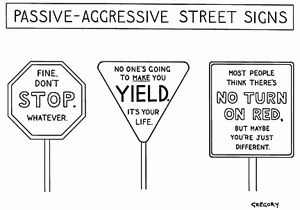
Our EQ this week: How can white women use their privilege to disrupt the culture of passive aggressive behavior and whitesplaining/mansplaining that emerge in many professional workplaces?
Episode Disclaimer: If any of the stories or examples in this episode seem familiar, it’s purely accidental, coincidental, and unintentional.
Join Hope and Annie as they discuss the ways in which white women engage in passive aggressive communication. These IWLs rehash an amazing video by MTV's Decoded White People Whitesplain Whitesplaining and Hope learns a new word-- hepeating. As you listen, you'll certainly think of your own experiences with passive aggressive forms of workplace communication.
Pop Critical Theory:
Today’s pop critical theory comes from the delightful intersection of sociology and linguistics - word blending. White women love word blends as much as your one quirky uncle loves puns. The IWL’s favorite word blend is obviously brunch - that’s breakfast plus lunch, natch - but we won’t wax poetic about waffles on THIS episode. The practice of word blending has brought us such gems as mansplaining and whitesplaining, two terms that are invaluable in our quest to explain the nuance of interpersonal and professional communication in the workplace. We have to give credit where credit is due - Rebecca Solnit coined “mansplaining” in her seminal essay-turned-book, Men Explain Things to Me.
Timeless or Terrible:

Trunk Shows
- Stella & Dot
- Tupperware
- Tea Light
- Cabi (buy from our friend!)
- Trades of Hope (buy from our friend!)
- 10,000 Villages
Do Your Fudging Homework:
- Hope: Tom Rademacher’s post Can We Talk About How Many White Women There Are in Schools and his interview with me.
- Annie: Read up on “cross-cultural communication” theory. Make and implement a plan for your own cross cultural communication (without tone policing!)
Find on Facebook www.facebook.com/IWLpodcast
Follow us on on Twitter @IWL_Podcast
Episode 5: Don't Send a Letter, Have a Conversation
Today’s essential question is: how do we build a sense of community and family across economic, racial, and cultural differences?
Special Guests:
Sheree Cooks, Public Education Family Engagement Advocate and Community Member; Received the 2017 Gold Star Community Partnership Award from TPS
Megan Clark, Family Engagement Liaison
We cram so much into this 50 minute episode, it’s like a teacher’s bag(s) on a Friday - bursting at the seams. What’s the difference between parent involvement and parent engagement? How do schools build (authentic) cross-cultural bridges? Why does it matter that we use language like “our school” rather than “my school” when we talk with parents and families? How do you balance your passion for your work and necessary self-care? How do we address the well-intended, color-blind teacher that raise our children to be empowered to fight systemic racism and color-blindness? Sheree and Megan break it down with painful, heartfelt, and sometimes hilarious anecdotes. These experiences are shared from their lens as parents.
They will be back on the show to share more stories from the perspective of community partners, highlighting the successes and challenges of engaging community and families.
Do Your Fudging Homework:
- Megan: Get involved in your community. Talk about the work that is being done and connect organizations with those who are passionate about the work.
- Sheree: Give where you can. Support programs that encourage community engagement. Participate in community events such as the Eastside Nature Walk on October 28.
- Annie: Read the article “Family Engagement: Resource Roundup” from Edutopia
Like us on Facebook www.facebook.com/IWLpodcast
Follow us on on Twitter @IWL_Podcast

Episode 4: Shame Bell Your Gender Norms & Pumpkin Spice Yogurt
Our essential question is: what is gender and why does it matter?
Hope & Annie continue their conversation about gender norms. What happens when we reject them? How do we work on making our relationships more equitable? The IWLs hit on double standards for girls in school dress codes, how LGBT folks disrupt gender norms by sharing household chores, and the disproportionate amount of emotional labor female-identified folks tend to do in the workplace.
Today’s pop critical theory is deviance. Deviance is behavior that violates social norms. Deviance actually serves a really important purpose - if you deviate from the norm, it's often because you're figuring out your identity and finding a sub-group to belong to, which can be really empowering. It can also be alienating, since you're separated from the group that sets the norms. How are we rewarded when we deviate? How are we punished? How many people need to be deviant before it becomes the norm? Deep thoughts!
References:


Do Your Fudging Homework:
- Hope: Samoan Third Gender--Read about it! Samoan Boys Raised As Girls The Feed/SBS Viceland
- Annie: “Environmental Racism is the New Jim Crow” published by the Atlantic on June 5, 2017.

Episode 3: Seeing, Being Seen, and the Panopticon of Life
Our essential question is: What does race, gender, and class have to do with seeing and being seen?
This episode Annie & Hope are joined by two specials guests Tacoma personality Bernadette Ray and business woman Soneya Lund of the Saol Salon in Yakima. From racial coming outs to deconstructing white beauty standards, the ladies ring the “Shame Bell” on ridiculous standards that society tries to hold us to. These honesty, raw, and personal stories of the womanhood will touch you.
Today’s pop critical theory is the metaphor of the panopticon, originally conceived by white dude political philosopher Jeremy Bentham and his brother. It’s basically a round prison so the guards in the middle can see prisoners, but the prisoners don’t know when OR IF they’re being seen. Remember - it’s a metaphor! But it was once built as an actual prison! What’s this have to do with us as women? As white, black, and brown women? How do (sometimes insidious) standards of beauty and conduct keep us in check?

Timeless or Terrible:
- Bottomless Mimosas/Brunch
- Ikea Furniture Valet
- Minimalism on Pinterest
Do Your Fudging Homework:
- Hope: 2 Dope Queens comprised of Phoebe Robinson who wrote You Can’t Touch My Hair and Jessica William who has a new show The Incredible Jessica James on Netflix
- Annie: Go Google image search Robert K. Merton’s “deviance typology,” then go down the sociology of deviant behavior rabbit hole on Wikipedia. Spend a little time thinking about your own deviance #winkyface
- Bernadette: give an authentic compliment to a woman of color
- Soneya: Go read Girl in Translation by Jean Kwok
Find on Facebook www.facebook.com/IWLpodcast or follow us on on Twitter @IWL_Podcast
Episode 2: Fish Crackers and White Supremacy
Our essential question is: What is white privilege and why do we need to talk about it?
Defining privilege as unearned advantage or right based on group status, Annie and Hope breakdown examples of white privilege from shopping without receipts to traveling without being stopped. Just because you can’t see it doesn’t mean it’s not there! Privilege is systemic. IWLs talk briefly about gendered and whitewashed toys, including where you can find some rad Barbies with afros (Etsy). BONUS TRACK: other diverse Barbie-like dolls, because representation matters.
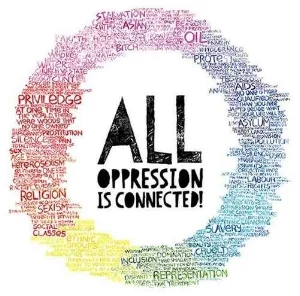
IWLs experiment with a new segment in the show called “pop critical theory.” Today's segment focuses on intersectionality. Intersectionality originally comes from feminist sociological theory and the work of Kimberle’ Crenshaw, who says that discrimination or criminal behavior against women can be targeted or intensified based on that woman’s race. So intersectionality has the power to compound your oppression, BUT! It can also be a source of personal power, because it gives you the ability to stratify different groups, AKA be in more than one group at a time.
Articles mentioned in the episode that you should go read RIGHT NOW:
- Harper's Sept 2017 Issue The Rise of the Valkyries
- NPR’s “The Women Behind the Alt Right”
- Lipstick Fascism

Timeless or Terrible: Annie and Hope weigh in on the staples of interchangeable white women everywhere.
Today’s topics--boot cuffs and the obsession with talking about generations (leave those millennials and their avocado toast alone).

Do Your Fudging Homework: Go read Tim Snyder’s book, “On Tyranny.” It’s like pamphlet-small, no excuses. Go Google pictures of the Panopticon so you can get an idea of what it looks like. Go read up on the idea of the invisible or imaginary audience. Take notes and prepare to discuss.
Find on Facebook www.facebook.com/IWLpodcast
Follow us on on Twitter @IWL_Podcast
Episode 1: An Introduction
This episode of IWL is brought to you by cardigans, the uniform staple of interchangeable white ladies everywhere. Today’s essential question: what’s an IWL and why does it matter?
Annie & Hope discuss where the term “Interchangeable White Lady” comes from and what the challenge is for white female teachers working with diverse students. The term original defined as “smiling, 20-something in her Target cardigan standing in front of a Smartboard” in Hope’s blog post The Interchangeable White Lady: An Introduction. In actuality, this label refers to the way students view their teachers. The concept was created in the context that 80% of educators are white women, teaching students of color (stats vary depending on source). Student perception is key. Relationships are crucial. White female teachers need to consider how students perceive them and accept the challenge this creates. It's a challenge to:
- To teach in a culturally responsive way based on the students before us.
- To view our instruction through the lens of traditionally marginalized youth.
- To distinguish ourselves as allies in the fight against institutional racism as we equip young men and women through the power of education.
Annie explains her own reactions to being an IWL. Paraphrases Roxanne Gay’s idea that you don’t need to apologize for being born white or wealthy, but to acknowledge how those traits are favored in society and how they make your movement through life different and often easier (and how you should use that privilege to help others move more easily). Annie also shared her deep, fangirl-like appreciation for the illustrious and fabulous Mary Yu.
Timeless or Terrible: Annie and Hope weigh in on the staples of interchangeable white women everywhere. Today’s topics:

Ugg Boots

LuLaroe Leggings

Kombucha w/ the mother
Do Your Fudging Homework: Go read Jeff Raikes’ article “Color-Blindness Is a Cop-Out” and “Unpacking the Invisible Knapsack” by Peggy McIntosh.
Find us on Facebook www.facebook.com/IWLpodcast or follow us on on Twitter @IWL_Podcast

Episode 0: Introducing Interchangeable White Ladies
Deconstructing privilege.
Confronting biases.
Working on being less basic.
We're launching the Interchangeable White Ladies podcast a show where we discuss education, culture, and local activism. We’re teachers so we have an essential question--How can white women use their privilege to deconstruct white culture, confront their own biases, be better allies, and be less basic? Listen to the Interchangeable White Ladies podcast to learn about all that and more!
Hosts: Hope Teague-Bowling & Annie Jansen