
Ep. 105: Critical Race Theory & Other Things White People Don’t Understand
EQ: How is the panic around Critical Race Theory indicative of white nonsense and why has it become such an easy target for Conservative Politicians?
In this episode of IWL, Megan and Hope dig into the kerfuffle that is the recent critical race theory (CRT) debate. Built on nonsense and white fragility, CRT is now a phrase donning the lips of many a well-meaning but poorly informed person. Armed with fear and misunderstanding, some communities are demanding school boards institute bans and establish parameters for how teachers teach history (and other related topics). From “why are folks mad” to “are we actually teaching CRT in our classrooms”, these IWLs share their own understanding of the topic and where they are still learning, growing or feeling confused.
Referenced in this episode:
The NYT 1619 Project Is Reshaping the Conversation about Race
"Spontaneous parent campaign" against Critical Race Theory in schools being organized by DC lobbying firm, known for past astroturf campaigns
If Critical Race Theory is Banned, are Teachers Protected By the First Amendment?
Do Your Fudging Homework:
Hope: Citizen Ed/Nate Bowling Interview: What CRT bans mean for teachers;
Katy Swalwell podcast Our Dirty Laundry

Ep. 104: Interrupting Whiteness One Zoom Session At a Time
EQ: Why do we need racial affinity groups to combat racism and how do they lead to sustainable change?
Guests:
Emily Meadows is an LGBTQ+ consultant and published author specializing in international schools. If you missed our conversation on creating inclusive spaces, go download Episode 99.
Tamara Friedman is a NBCT, school leader, and classroom teacher. She works towards implementing culturally relevant and anti-racist pedagogy in her classrooms and currently teaches 4th grade at The American School of the Hague.
In this episode we discuss the distinctive ways that racism and white supremacy manifest in an international school context. While commonly appearing in the form of deflection because the school is “diverse”, explicit anti-racism work is long overdue. Our guests, Emily and Tamar, share their journey to establishing the Whiteness Accountability Group for International Educators including how it is rooted in volunteer participation, leading through vulnerability and story-telling, and collective leadership. Additionally, they discuss the need for accountability to each other, group participants, and to people of color.
To understand the purpose and framing of racial caucusing, check out the following documents:
Do Your Fudging Homework:
Hope: Racial Equity Tools & Culturally responsive Leadership, Me & White Supremacy by Layla Saad
Megan: If you work in a school, make sure you know what your School’s Culturally Responsive Teaching policies are and know who the leadership team is that is responsible to implementing those.
Tamara: Franchise Kendall Understanding White Privilege and Harvard Implicit Bias Test
Emily: Join our group by emailing us; Learning for Justice Standards;

Ep. 103: Meet Us at the Corner of Evangelical Fundamentalism & Tiktok
EQ: To what extent should we pay attention to the intersection of white supremacy, religious fundamentalism, crazy, and Tiktok?
In this episode of IWL, Hope and Megan delve into the weirdness that is the intersection of Tiktok, the Far-Right and Evangelical Fundamentalism. Is the vaccine a mark of the beast? Is the Hunger Games hand signal a camaraderie between anti-vaxxers? How did “persecution culture” become a thing? How are private social media companies limiting or banning the spread of misinformation and lies?
Lastly, these IWLs try a new segment to honor the end of the school year and #throwback to HS yearbooks--School Year Superlatives!
Related Resources:
Do Your Fudging Homework:
Hope: For a good laugh check out Kathleen Cameron, @kathdoestiktok
Megan: Go watch this very Northwest persona, Bunny the Dog

Ep. 102: Cancel Culture is Fake Moral Panic
EQ: What is the difference between Cancel Culture and Consequence Culture and how should each be utilized to promote justice and equity in the world?
Guest: Nate Bowling--2016 WA STOY, King of Cancel, and host of the Nerd Farm Podcast, the second hottest show in the Channel 253 network.
After a quick temperature check with “Yeah, No, Yeah”, Megan, Hope, and Nate dive into defining cancel culture. From shunning to medieval mob justice, cancel culture is often touted as unfair and extreme. The team discusses various iterations such as call-in culture, consequence culture and what it means to remorse, reconciliation and accountability. In the end, they that those crying “stop cancelling me” are just whining about accountability in an era of social media and public consciousness that calls out sexism, racism, and bigotry more than ever before. Dr. Seuss really isn’t cancelled. Trump still has access to social media platforms. Matt Ygelsias is still alive and well on Substack. Folks with power and privilege are painting this era in moral outrage. When in fact, the outrage should be at the injustices that run rampant through our community. “If we can hold 14 and 15year old Black males who make mistakes accountable for the rest of their lives, then college educated white folks can afford to lose jobs.”
Additional Resources:
Champagne & Real Pain:
🥂 Nikole Hannah Jones, The 1619 Project
🥂 All companies and corporations not being afraid to be called out for “cancel culture” and react in an expedited way (Ben and Jerry’s!)
Do Your Fudging Homework:
Megan: Pay attention to redistricting/panic of the 2020 elections and impact on voter suppression
Nate: Don’t engage in debates over cancel culture. You have a right to guard your time and energy.
Check out the podcast: You’re Wrong About

Ep. 101: Honoring AAPI Heritage Month
EQ: How can we intentionally highlight, honor and celebrate AAPI folks (contemporary or historical) during the month of May?
On this episode of IWL, Hope and Megan discuss the history of AAPI Heritage month and unpack the often problematic erasure of Asian history in the United States. We begin by discussing the term “AAPI”, where it originated, and the case to stop its use.
Megan shares her history and identity in the Asian American community and both women discuss the problems and harm of the idea of the “Model Minority” myth and emphasize the importance of educating ourselves about all parts of Asian American and Pacific Islander history in order to better inform how we can be allies moving forward. Hope and Megan share ideas for how to celebrate and honor this month both in the classroom as well as in our day to day lives.
Related Links:
Asian Americans are Still Caught in the Trap of the ‘Model Minority’ Stereotypes. And it Creates Inequality for All - Time article referenced by Megan
Model Minority Myth Again used as a Racial Wedge Between Asians and Blacks
Do Your Fudging Homework:
Please take the time to learn the stories and histories of the many different people and cultures that make up the label Asian American Pacific Islander.

Ep. 100: A Centennial Celebration with Special Guest Author S.K. Ali
EQ: How can we normalize the representation of Muslims in literature and support storytelling that tackles Islamophobia, increasing empathy across cultures and religions?
For IWL’s special 100th episode Hope and Megan are joined by the very special guest, S.K. Ali. Ali is the author of Saints and Misfits, a 2018 William C.Morris award finalist, and Love from A to Z, an NBC Today Show’s “Read with Jenna” Book Club selection. During this episode they discuss the importance of representation of POC in literature, specifically around Muslim characters. Ali shares about her journey to becoming an author and reflects on her intentionality of de-centering the white gaze in her writing.
Author and books recommended in the episode:
Randa Abdel-Fattah - Does My Head Look Big in This?
G. Willow Wilson - Alif the Unseen
Related Links:
Do your fudging HW:
Hope: Pre-order S.K. Ali’s new book, Misfit in Love out May 26th!
Megan: Contribute and use Ali’s hashtag #muslimshelfspace to highlight the need for more Muslim authors writing Muslim characters.
Sajidah: With Ramadan here, purchase and read Once Upon an Eid: Stories of Hope and Joy from 15 Muslim Voices

Ep. 99: Deliberatively Inclusive-An Interview with Inclusion Consultant Emily Meadows
EQ: How can schools and educational systems be better allies and create more inclusive spaces and policies for LGBTQ+ youth?
In this episode, Megan and Hope dialogue with Emily Meadows, an LGBTQ+ consultant and published author specializing in international schools. Throughout the episode, they discuss the ways school leaders can be intentional in efforts of inclusion, specifically with supporting LGBTQ+ students. Emily reflects on common mistakes in educator allyship and shares practical advice for schools on their journey to developing supportive, accepting school communities. Follow Emily Meadows on Twitter.
Related Links:
Champagne & Real Pain:
👎🏻 The targeting of Asian Americans in hate crimes
👎🏻 NCAA and the inequities between the mens vs women’s tournament
Do Your Fudging Homework:
Call your reps and do not let them sign these anti-trans legislation

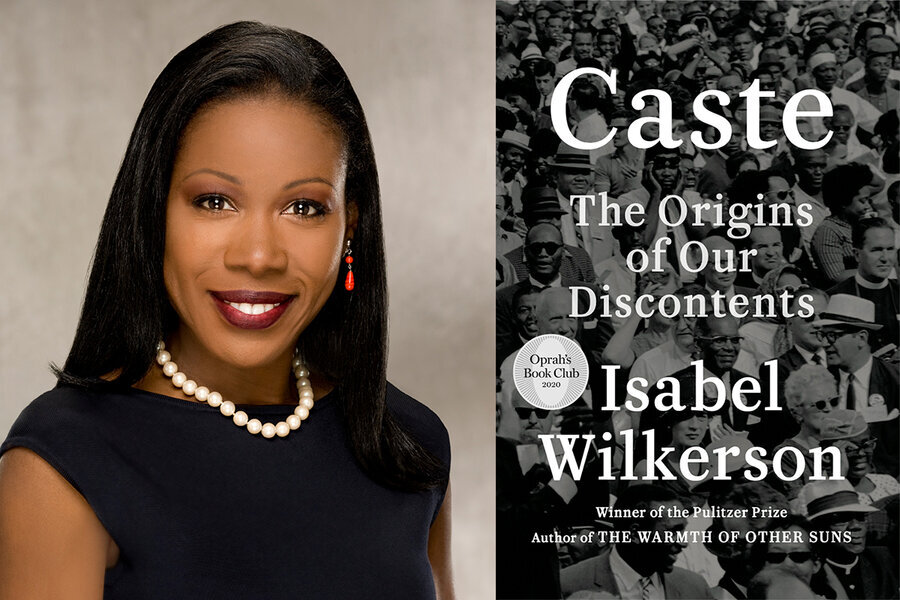
Ep. 98: #ReadLessBasic Book Club--Caste by Isabel Wilkerson
We’re joined by Nerd Farm podcast host, Nate Bowling and Middle School Humanities teacher, Crissy Calera for this discussion of Caste, our #readlessbasic book club choice. We’re also delighted to include recordings from Megan’s students as they share their encounters with the text. This rich and challenging book is more complex than this hour of conversation could capture. After listening to the podcast, please check out the episode released on Nerd Farmer Podcast. #NerdFarmReads and Caste in K-12 & Policing
We also encouraged you to read some of the following sources:

Ep. 97: Make Space for Intersectional Conversations This Women's History Month
Essential Question: How can we intentionally highlight, honor and celebrate “forgotten” women in history (WOC, Trans women, Indigenous, etc.) during Women’s History Month
In this episode Megan and Hope reflect on the lessons they learned during Black History month and discuss the origins of Women’s History Month in the US. It was thanks to Jimmy Carter that in 1980 the week of March 8 was officially proclaimed Women’s History Week. Then, Congress passed a resolution that eventually expanded it into a Month. More importantly on a global scale people around the world celebrate March 8 as International Women’s Day. This year’s International Women’s Day theme is “Choose to Challenge” and the organizers have said, “A challenged world is an alert world. Individually, we're all responsible for our own thoughts and actions - all day, every day. We can all choose to challenge and call out gender bias and inequality. We can all choose to seek out and celebrate women's achievements. Collectively, we can all help create an inclusive world.” Post historical context, the IWLs analyze what it means to “choose to challenge”, including who has paved the way for women’s rights and who are a few unsung heroes we all should know more about. Lastly, Megan and Hope commit to challenging the status quo and #beinglessbasic this month (and all year long!)
Related Links:
The Black Women Who Paved the Way for this moment in history
Comandante Ramona of the Zapatistas; Hilary Klein’s book Companeras
Where to Spend Your Money This Month:

Finish reading by March 13 for the #readlessbasic book club conversation!
Follow us on Twitter @IWL_Podcast or find us on Facebook

Ep. 96: Moving Beyond Tropes--A Discussion about BHM in Schools
Essential Question: How can you move your work with BHM out of whitewashed ideals and into a less basic space?
In this episode, Megan and Hope discuss the importance of Black History Month, why it’s still needed and how teachers should continuously embed the stories and histories of Black people all year long.
Decentering whiteness and white comfort at this time of the year is crucial for any educator but especially those who tout their anti-racist identity. Many of us are taught that there is a Villain, Victim, and a Hero in every story. White people have been taught our whole lives that they are the heroes, and if they can’t be the heroes then they are the victims. White allies need to be comfortable accepting that they are not the heroes in the antiracism story and that in fact, they have been the villains to the BIPOC experience for centuries. White people need to actively work to not center whiteness or white comfort.
Resources referenced:
Amazing resources 28 Days of Black History sends daily historical moments w/ relevant links (written by POCs)
5 Ways White Allies can Celebrate Black History Month All Year Long
Teaching Tolerance aka Learning for Justice BHM Resources; Why we Need to Teach BHM especially this year
Who to follow on social media:
Do Your Fudging Homework:
Hope: Continue to integrate BHM into your lessons this month and don’t give up on this aspect of the work even in a pandemic.
Megan: Go follow Garrison Hayes - and then do/read what he recommends. His Instagram is good, but his Tiktok is better. Garrison Hayes - TikTok - Insta @garrisonh

Book Club Reminder:
Pick up a copy of Caste by Isabel Wilkerson to join the collab book club between The Nerd Farmer Podcast and IWL.
Tweet about the book with either #nerdfarmreads or #readlessbasic
Follow us on Twitter @IWL_Podcast or find us on Facebook

Ep. 95: IWL Crossing--On Returning To School in Tacoma
Tacoma Public Schools plans to return all grades to some in-person classroom teaching next month. Frankly, the “plans” sound more like “wishes,” “hopes,” “fingers crossed,” “it sure would be nice…” So, what do teachers think about that, and what should parents be asking?
Megan, Hope, and Auntie Evelyn join up again to discuss the latest news on the return to school for Tacoma Public Schools. There are only three months left in the school year–do we use them for something entirely new (which could be a super-spreader event daily), or use the time to get everything organized so that schools really can be on track to return in the fall? It’s not an easy question to answer, and well-intentioned people will have wildly different opinions based on risks, family situations, and experience.
Relevant Readings:
Do Your Fudging Homework:
Call/email the City Council
Call/Email the school board
Call/email the Superintendent Carla Santorno—csantor@tacoma.k12.wa.us
Deputy Superintendent Josh Garcia—jgarcia2@tacoma.k12.wa.us
Post on Social media and tag the school district and Superintendent.
Get your friends to do the above

Ep. 94: New Year, New Boos
EQ: How can people safely navigate singledom and dating in the midst of a pandemic and in a post 2020 world?
In today’s episode, Hope and Megan are joined by guest Katie Walters to discuss the tumultuous world of online dating during a global pandemic. The conversation spans the spectrum of dating horror stories to conversations about what we owe each other in the virtual dating world. The three discuss whether the rules of dating have been changed after 2020 or whether they have (unfortunately?) stayed the same. We have a drop in guest appearance by Andrew Hammond from Into the Archives with A-Hamm.
Links from the episode:

Book Club Reminder:
Pick up a copy of Caste by Isabel Wilkerson to join the collab book club between The Nerd Farmer Podcast and IWL.
Tweet about the book with either #nerdfarmreads or #readlessbasic

Ep. 93: IWL Crossing: Tacoma School Schedules and Teacher Respect; WTF TPS?!
Over the last week Tacoma social media has been abuzz with concerns about a “new” classroom schedule for Tacoma Public Schools that is to go into effect on February 8. The schedule shows “in person” teaching in the afternoons and remote learning in the morning.
Why? Our COVID 19 numbers are far worse now than they were last March, and there are new variants that are even more contagious. Yes, everyone, especially teachers, students and parents, wants to get back to normal. But we need to do that safely. Can we safely return students to the classroom now?
Well, it turns out that the schedule showing “in person” class periods really means “eventually, when we return to in person teaching, it will be on this schedule, so let’s try this schedule out now even if it is disruptive and results in less actual class time with students.” In response, many teachers and parents are saying “WTF TPS?!!!”
In this joint episode of Crossing Division, Tacoma’s Talk Show, and Interchangeable White Ladies (IWL), Tacoma’s premier teaching and equity podcast, IWLs Hope Teague-Bowling and Megan Holyoke join Evelyn Lopez to talk about what’s going on in Tacoma School World. Why a schedule change now? Has the teachers’ union sold out its members? And what we can do about it? Listen and let us know what you think, and what should happen next!
To understand this better, check out the following links:

Ep. 92: New Year, Same You
EQ: What belief, practice, habit, or mindset are you taking with you in 2021?
In today’s episode we talk all about New Year, Same. Old. You. With the New Year comes the pressure to create resolutions and completely change who you are, but what if you don’t have to throw everything out? Hope and Megan discuss the lessons that they learned in 2020 and why they want to bring those with them into 2021. In the back half of the episode, they explain what NOT to bring with you into 2021 and highlight some white people who just keep on insisting on white people-ing.
Related to our Discussion:
Quick Overview of what process was taking place in Congress on January 6
Here Are The Republicans Who Objected To The Electoral College Count
Do Your Fudging Homework:
Do something this week to continue to practice the lessons from 2020.

Book Club Reminder:
Pick up a copy of Caste by Isabel Wilkerson to join the collab book club between The Nerd Farmer Podcast and IWL.
Tweet about the book with either #nerdfarmreads or #readlessbasic
Follow us on Twitter @IWL_Podcast or find us on Facebook

Ep. 91: Champagne and Real Pain, 2020 Year In Review
Dear listeners, we brought the gang of interchangeable hosts back together for this special episode—the final show for 2020!
EQ: Who or what from 2020 deserves some champagne 🥂 and real pain👎🏻 pain this year?
Today’s special episode is all about the Real Pains of 2020 (there were many) and raising a glass in collective, and socially distanced celebration of the good things from 2020 (yes, there were good things!). Hope, Annie, and Megan discuss their top 3 Real Pains of 2020 and then finish the episode with their top 3 Champagnes. We also include honorable mentions shared by some of our listeners throughout the episode.
Additional Resources
Book Club Reminder:
Pick up a copy of Caste by Isabel Wilkerson to join the collab book club between The Nerd Farmer Podcast and IWL.
Tweet about the book with either #nerdfarmreads or #readlessbasic

Ep. 90: Out, Damned Test!
EQ: Should Universities that adopted test-optional practices due to Covid maintain these policies in the post Covid world?
Guest: Mallory Torgerson-Preuitt (torgersm@seattleu.edu) has worked in Higher Ed for 10+ years in a variety of positions and is currently the Associate Director of Transfer Admissions at Seattle University. She has spent her career focusing on accessibility to higher education and working to change the review process for transfer applicants to focus on counseling and advising.
Our conversation today focuses on test optional Universities and ultimately its role in equity and access to higher ed. We are joined by Mallory Torgerson-Preuitt, who opens the conversation by sharing her own journey to her higher education admissions work, focusing on how she didn’t find the right fit immediately, and how she stepped into her own during her time at a Community College. The discussion then moves into how Seattle University moved to a test optional model, even before Covid hit. The conversation hits on access and equity to test prep, testing sites, preparation, transportation and equitable rigor. We make the case for why Universities should consider keeping their Covid test optional policies in place for long after Covid leaves.
Related Links:
Champagne and Real Pain:
🥂The court transcripts re: Election 2020
🥂 All the admissions and high school counselors who are working their tail off during the Covid times
👎🏻 The White House refusing to answer the public's questions during a pandemic.
👎🏻Those election lawyers who are fighting for the election fraud angle. Shame Bell on getting State abbreviations wrong.
👎🏻All of the people that are not following Covid guidelines and being good community members.
Do Your Fudging Homework:
Hope/Megan: Read and tweet about Caste! Read with some friends.
Mallory: The Daily Podcast. Really good digestible news.

Book Club Reminder:
Pick up a copy of Caste by Isabel Wilkerson to join the collab book club between The Nerd Farmer Podcast and IWL.
Tweet about the book with either #nerdfarmreads or #readlessbasic

Ep. 89: Put Your Money Where Your Mouth Is
EQ: How can financial giving a vital part of our equity & justice work?
Our conversation today focuses on how your annual giving can #belessbasic. As we know better, we need to do better, and that includes our giving. We first focus on why you should care about where you are giving, and how you might think about where you choose to give your money. Hope and Megan then move into sharing the organizations that they choose to support, ranging from a wide variety of social causes. They end the episode talking about the suggestions that came in from some of our listeners. You can find an extensive list of resources below to the organizations that we discussed in today’s episode.
Tacoma-Local Orgs to Support:
Channel 253, Snacks for Schools, Tacoma Diaper Drive, Sandwiches for Homeless, LHS Community Resource Center
Local restaurants--En Rama, Doyles, Love By the Slice, etc.
Some of Hope’s Favs:
Planned Parenthood - Women’s Health
Center for Reproductive Rights - Women’s Health
Border Angels - Immigrant Support and Aid
CAIR --Council of American Islamic-Relations
Innocence Project - Provides legal support to overturn wrongful convictions
Megan’s Recommendations:
Native Women’s Wilderness - Missing and Murdered Indigenous Women - Indigenous Women’s rights
FairFight - Access to Voting
Livestrong - Cancer/Reproductive Health
National Ovarian Cancer Coalition - Cancer Advocacy
From our Listeners:
Niles Edge in Seattle--mental health org lead by and for Black people
Na’ah Illahee Fund--STEM for Native Girls
Somali Parents Education Board, Somali Family Education Advocacy
Densho Project--preserving stories of Japanese A incarcerated during WWII
Southern Poverty Law Center--racial and social justice
Africatown Community Land Trust, Seattle--investment & land community
The Trevor Project--LGBTQ Youth
Gender Cool Project - LGBTQ Youth - Transgender and Non-Binary focus
My Purple Umbrella - LGBTQ Youth - Transgender and Non-Binary focus
Rainbow Center - LGBTQ Community
Tacoma Urban League - assist African Americans and other underserved urban residents in the achievement of social equality and economic independence.
Immigration Legal Resource Center-- - Legal resources for Immigrants

Ep. 88: Someone is Waiting for Who You're Becoming
Note to listeners: We recorded this episode at the end of October.
EQ: How can an emphasis on educational leadership impact and improve the recruitment and retention of teachers, especially Teachers of color?
Guest: Patrice Dawkins-Jackson, a Science educator, ambassador fellow, teacher leader, and ASCD Board Director. Patrice is also a Carnegie Foundation Associate, Director of the Post Baccalaureate Fellowship Program and Vice President of Cool Boys Communicate, Inc Board.
Our conversation spans a range of topics but centers Patrice's journey from the classroom into leadership. She shares her passion for being a disruptor, making pathways for students, and how we should develop our own pathways. One of the mottos she uses to drive her choices is the idea that “someone is waiting on who you’re becoming.” In order to make change we need to rethink our own roles and involvement in these changes. Additionally, she outlines some ways schools and districts should change to create more racially and culturally diverse communities by focusing on being places to belong. There is a necessary mindset shift that those closest to the work need to commit rather than buying into something
Related resources:
Do Your Fudging Homework:
Hope/Megan: Check out Cool Boys Communicate Inc and Carnegie Foundation for the Advancement of Teaching
Patrice: Embody the idea that someone is relying on you. Get started on your journey and bring someone along

Ep. 87: A Letter to the 55%
EQ: How did we go from the Woke White Women Movement that embraced BLM and rejected PSL in April to 55% of White women voting for Trump in November?
We start this episode trying to build our empathy for all the basic white women out there by taste testing pumpkin spice flavored thing. We then launch into a discussion how shameful it is that white voters STILL vote for Trump DESPITE the last four years. As hhhwhite women ourselves (or white passing in Megan’s case), we feel especially convicted to “get our girls.” Ultimately, this conversation boils down to the fact that white women MUST do better and we cannot let our foot off the gas just because Biden is elected.
Jumps on soapbox: Equity is not a hat that you wear. Where you do a couple posts on your social media, read a book, and then you can walk away from it for the rest of the week, thinking you checked the box. It is simply not enough. Equity should be a value you carry with yourself all of the time. It should be a part of you and how you walk through life. Steps off soapbox
Related Sources:
Vox: We Need To Talk about the white people who voted for Trump
Vogue 2018 Piece “Why Do White Women Keep Voting for the GOP”
Champagne & Real Pain:
🥂 The Judges who have absolutely no patience for the ridiculous lawsuits the Trump campaign is filing. Read the transcripts, they’re great.
👎🏻 The Texas Lieutenant Governor who offered up $1 million to anybody that could come forward with proof of election fraud… BUT a Champagne for the PA Lieutenant Governor who came back with the best tweet in response!
Do your fudging HW:
Megan & Hope: DO THE WORK.

Ep. 86: Raising STEMinists
EQ: What does equity in science education in the Corona Era look like and how might teachers continue to evolve their practices to engage students in a virtual space?
Guest: Chanel Johnson, science educator. Check her bio and interview from Leading Equity and Interview with Teachers on Fire.
Of course we had to ask Chanel a little bit about the historic role Georgia is playing in the 2020 elections. However, our main conversation focuses on figuring out what it means to be a STEMinist and how to encourage students of color to see themselves as scientists. Chanel also gives us insight into how importance Science education is in the middle of a pandemic. Lastly, she shares resources and ideas to help teachers intentionally embed culturally responsive teaching practices in a virtual context?
We’re excited to announce a collab with The Nerd Farmer podcast. We’re both going to be reading and recording episodes on the book Caste by Isabel Wilkerson. Tweet about the book with either #nerdfarmreads or #readlessbasic
Champagne & Real Pain:
🥂 YO, BIDEN IS PRESIDENT-ELECT!!!!!!!
Do Your Fudging Homework:
Megan: Watch Chanel’s interview with Teachers on Fire! The link will be in the show notes
Hope: Order and read Chanel’s book “The Gyrlfriend Code: Sorority Edition”; Also, KEEP DOING THE WORK.